Exploring synchronization challenges between mobile and desktop interfaces during real-money Texas Hold'em tournaments
Written by Noah Becker · Jul 9, 2026
Exploring synchronization challenges between mobile and desktop interfaces during real-money Texas Hold'em tournaments
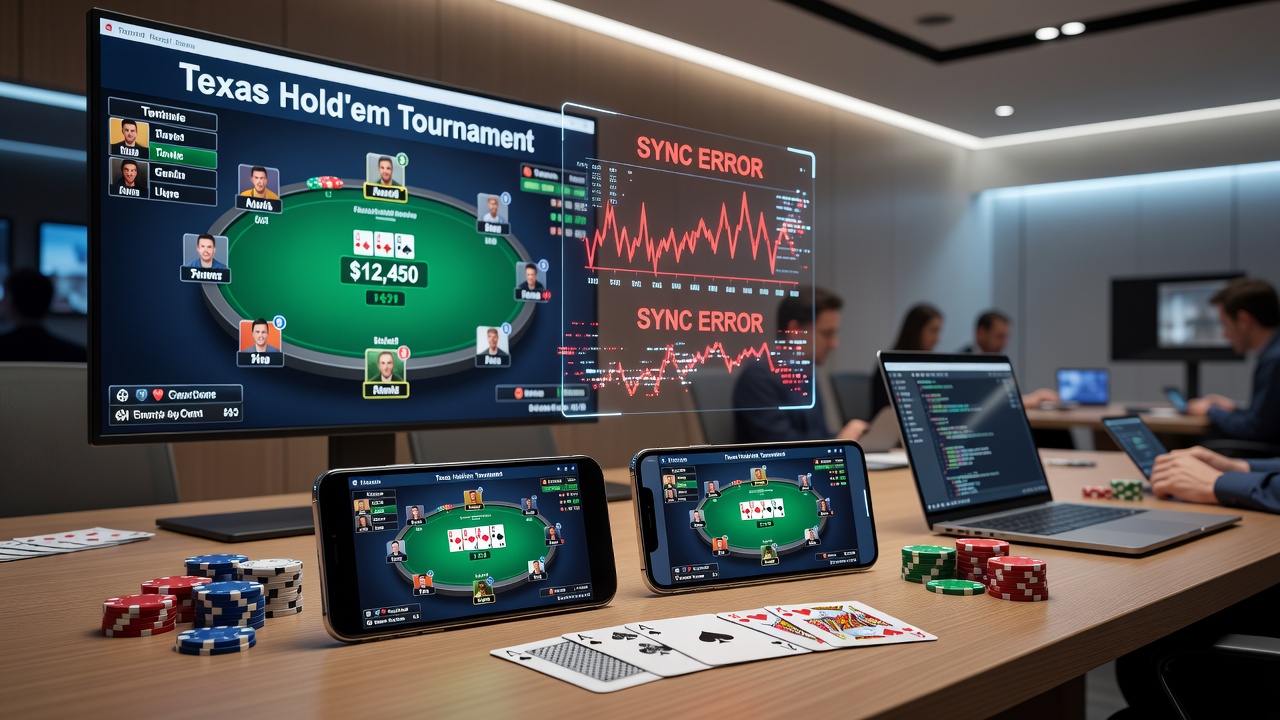
Real-money Texas Hold'em tournaments require precise coordination across devices, yet synchronization issues frequently arise when players switch between mobile phones and desktop computers during the same session. These platforms must maintain identical game states including hole cards, community cards, pot sizes, and action timers, but network conditions and interface designs often create discrepancies that affect decision timing and accuracy.
Core technical synchronization points
Server-side processing handles the core game logic for all connected clients, yet mobile and desktop versions receive updates through different data streams that can arrive at varying speeds. A player who starts on desktop and moves to mobile may notice the blind timer advancing at a slightly different pace because the mobile app compresses certain packets to conserve bandwidth while the desktop client streams full-resolution updates. Research from gaming platforms indicates these timing offsets range between 200 and 800 milliseconds during peak tournament hours.
Device-specific rendering further complicates matters. Desktop interfaces display the entire table with multiple player stacks visible at once, whereas mobile screens scroll or stack information vertically, which means a user checking stack sizes on a phone might miss an all-in announcement that appears instantly on a larger monitor. Tournament directors have documented cases where players requested time extensions after claiming their mobile view lagged behind the official clock.
Data consistency across sessions
Hand history logs must remain identical regardless of access point, but partial sync failures occasionally leave mobile users without the most recent betting round. When this occurs the platform forces a refresh that pauses the player's action clock, creating an uneven experience compared with desktop users who receive continuous websocket updates. Observers note that cross-platform play in multi-table events amplifies these problems because each table maintains its own synchronization thread.
Security protocols add another layer. Two-factor authentication tied to device tokens sometimes requires re-verification when switching platforms mid-tournament, which delays re-entry into the hand. Data from the New Jersey Division of Gaming Enforcement shows that verification delays accounted for 3.2 percent of all pause requests in online events during the first half of 2026.
Input method differences and error rates
Touch interfaces introduce distinct interaction patterns compared with mouse and keyboard controls. A mobile user dragging chips to the pot may overshoot or select the wrong raise amount because the slider sensitivity differs from the desktop version's click-and-drag precision. Tournament software logs reveal that mobile misclicks occur at roughly twice the rate of desktop errors during late-stage events when stack pressure increases.
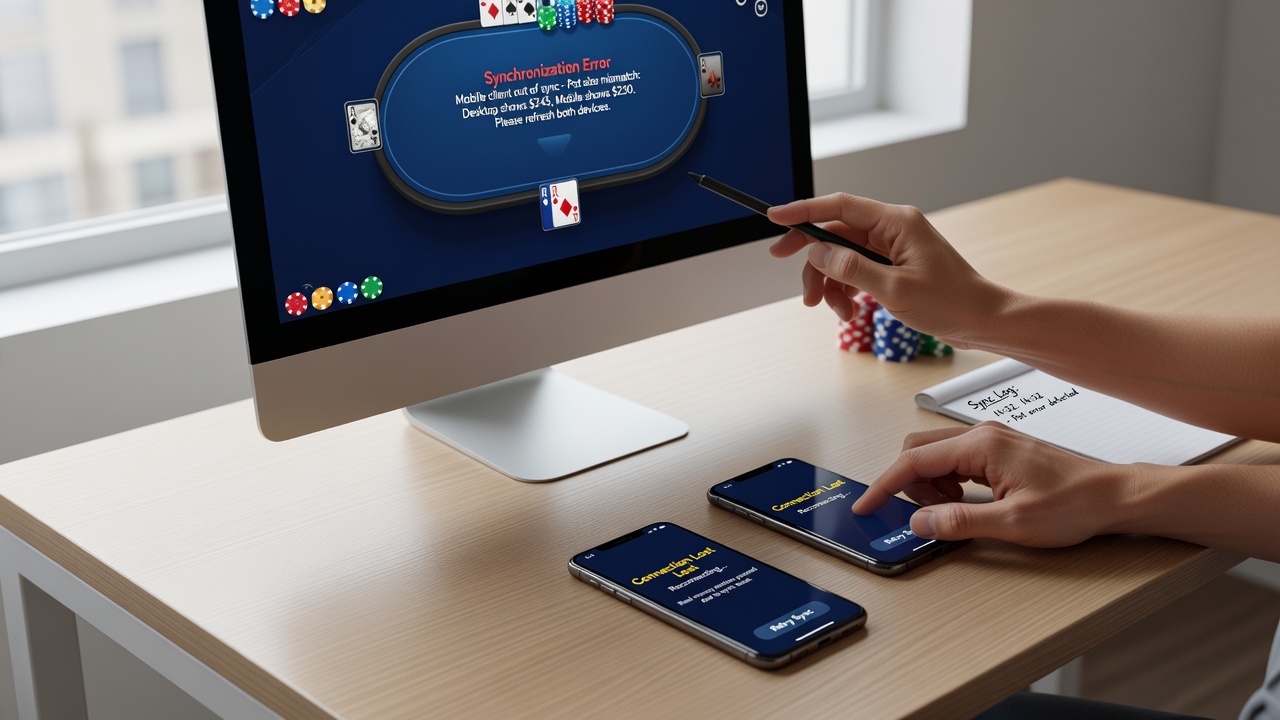
Keyboard shortcuts on desktop allow rapid fold-call-raise sequences, yet mobile players rely on on-screen buttons that require visual confirmation before each tap. This difference becomes pronounced in fast-fold formats where the action clock runs at thirty seconds or less. Platforms have begun implementing haptic feedback on mobile to signal valid inputs, although adoption remains uneven across operators.
Platform responses as of July 2026
Major operators introduced unified client frameworks that detect the active device and adjust data priority accordingly. These systems push critical state changes such as community cards and all-in announcements through a dedicated high-priority channel while allowing secondary information like chat or statistics to queue behind. Early results from July 2026 deployments show a 17 percent reduction in reported sync complaints across participating sites.
Some platforms now offer a "session continuity" mode that preserves exact table coordinates and zoom levels when a player transitions devices. This feature relies on cloud-stored preference files that load within two seconds of login, minimizing visual disruption. Industry reports from the Canadian Gaming Association indicate that operators using this approach experienced fewer mid-tournament support tickets during the summer schedule.
Future developments
Engineers continue testing predictive buffering techniques that anticipate network jitter and preload the next expected game state on both mobile and desktop clients. Laboratory trials suggest these buffers can reduce perceived latency by up to 40 percent without increasing server load. Regulatory bodies in multiple jurisdictions have begun reviewing these tools to ensure they do not create unfair advantages for players with superior connections.
Conclusion
Synchronization between mobile and desktop interfaces remains an ongoing engineering focus in real-money Texas Hold'em tournaments. Continued refinement of data channels, input handling, and session continuity features helps reduce friction, while ongoing monitoring by regulators and platform operators tracks performance across device types. As tournament fields grow and cross-platform participation rises, these technical alignments directly influence the fairness and reliability of competitive play.