How Biometric Feedback Tools Are Changing Approaches to Strategy in Remote Real-Money Tournament Play
Written by Lars Becker · Jun 8, 2026
How Biometric Feedback Tools Are Changing Approaches to Strategy in Remote Real-Money Tournament Play
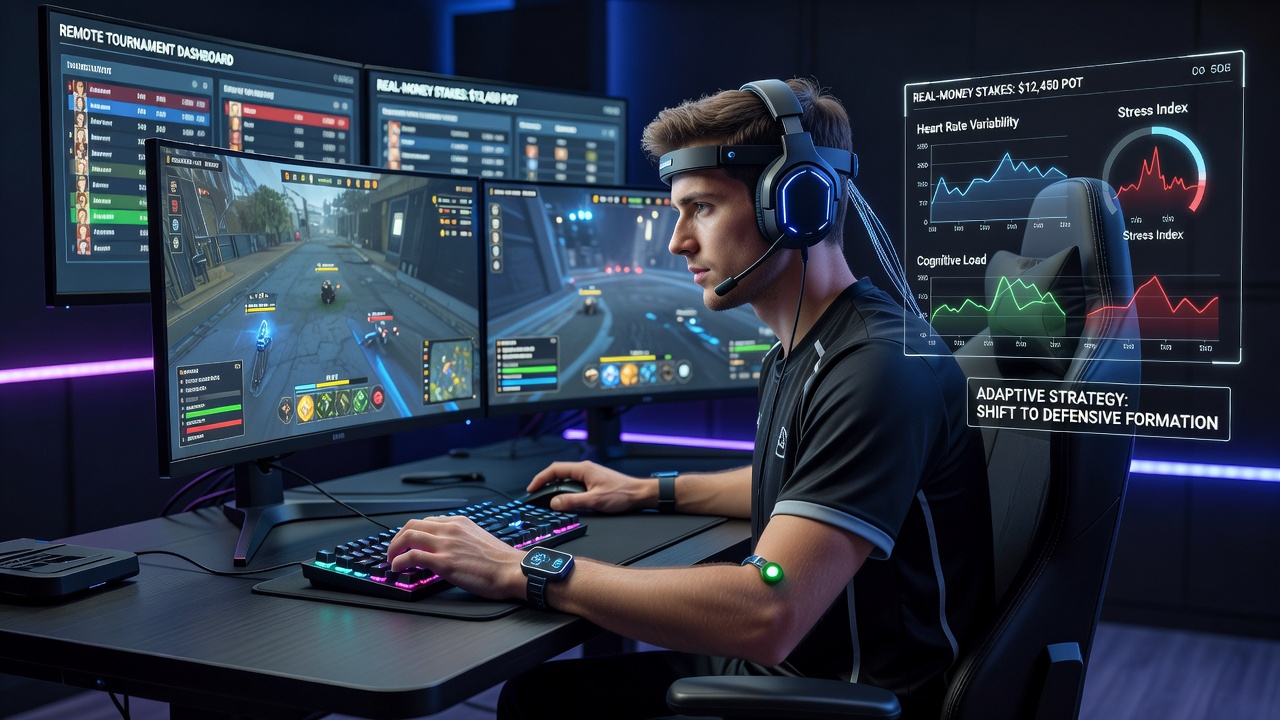
Biometric feedback tools now integrate directly into remote real-money tournament platforms through wearable devices and camera-based monitoring systems that track physiological signals such as heart rate variability, skin conductance, and eye movement patterns during competitive sessions. Players access these metrics through dashboards that update in real time while they compete in hold'em and other formats across multiple tables. Operators have incorporated these systems into platforms that comply with standards from bodies like the Nevada Gaming Control Board, where data collection occurs under established regulatory frameworks for player protection and fair play.
Core Components of Biometric Integration
Heart rate monitors connect via Bluetooth to tournament software and flag elevated arousal levels that often coincide with high-stakes decisions, while eye-tracking cameras mounted on player devices record gaze duration on community cards and opponent avatars to quantify attention allocation. Skin conductance sensors embedded in wristbands detect micro-sweat responses that correlate with stress during all-in moments, and this information feeds into algorithms that generate post-hand summaries for review. Research from institutions including the University of Sydney's gambling studies unit shows these signals provide measurable indicators beyond traditional statistics like VPIP or aggression frequency, allowing participants to identify physiological triggers that precede suboptimal folds or calls.
Strategic Adjustments Driven by Real-Time Data
Participants review biometric logs between tournament breaks to adjust pre-flop ranges when elevated heart rates appear consistently before marginal hands, and they modify bet sizing on later streets when eye-tracking data reveals prolonged focus on specific board textures. Software overlays now display anonymized aggregate trends from similar player pools, so individuals can compare their own stress responses against group norms without accessing personal identifiers. In multi-table events scheduled through June 2026, platforms have begun testing automated alerts that pause play briefly when conductance spikes exceed thresholds, giving users time to recalibrate before committing chips.
Implementation Across Platforms and Regions
Canadian operators licensed under provincial frameworks have adopted biometric modules that sync with existing responsible gaming tools, while Australian sites reference guidelines from the Australian Communications and Media Authority to ensure data handling meets privacy requirements. European platforms follow directives from the Malta Gaming Authority, which mandates clear consent processes before physiological data collection begins. These systems operate alongside existing verification timelines, so players complete biometric calibration during account setup rather than interrupting active sessions.

One documented case involved a cohort of online participants who used combined heart rate and gaze data to reduce continuation betting frequency on dry boards after noticing consistent arousal spikes during those spots. Tournament organizers report that such adjustments appear in session replays shared through community forums, where players discuss patterns without disclosing raw physiological readings. Data from industry reports compiled by the European Gaming and Betting Association indicates rising adoption rates among operators offering progressive prize pool events, particularly those running concurrent series through mid-2026.
Training Protocols and Skill Development
Coaches working with remote competitors now incorporate biometric review sessions into preparation routines, presenting players with anonymized case files that highlight moments when physiological markers diverged from optimal decision trees. Breathing regulation exercises paired with live feedback loops help stabilize readings during extended play periods, and repeated exposure to these protocols correlates with steadier performance metrics in follow-up events. Academic papers from the University of Nevada Reno's gaming research center document how such training shifts focus from purely mathematical ranges toward integrated awareness of bodily responses that influence those ranges under pressure.
Regulatory and Technical Considerations Through 2026
Updates scheduled for June 2026 include expanded API support that lets third-party analytics services pull biometric streams while maintaining encryption standards required by multiple jurisdictions. Regulators continue to evaluate how this data intersects with existing rules on player tracking and self-exclusion, prompting operators to build opt-in toggles that let participants disable monitoring without affecting tournament eligibility. Industry conferences planned for that period will feature demonstrations of next-generation sensors capable of non-contact measurements through standard webcams, reducing hardware barriers for new entrants.
Conclusion
Biometric feedback continues to supply remote tournament players with additional layers of information that supplement established statistical approaches, and adoption patterns show steady growth across regulated markets. Platforms integrate these tools while adhering to regional compliance requirements, and ongoing developments through 2026 will likely refine how physiological data informs both individual strategy and broader platform design. Observers tracking these trends note the expansion of compatible hardware options and the increasing availability of training resources tied directly to biometric outputs.