Latency Patterns Across Server Networks Correlating with Betting Adjustments in High-Stakes Digital Hold'em Contests
Written by Avery Becker · Jul 18, 2026
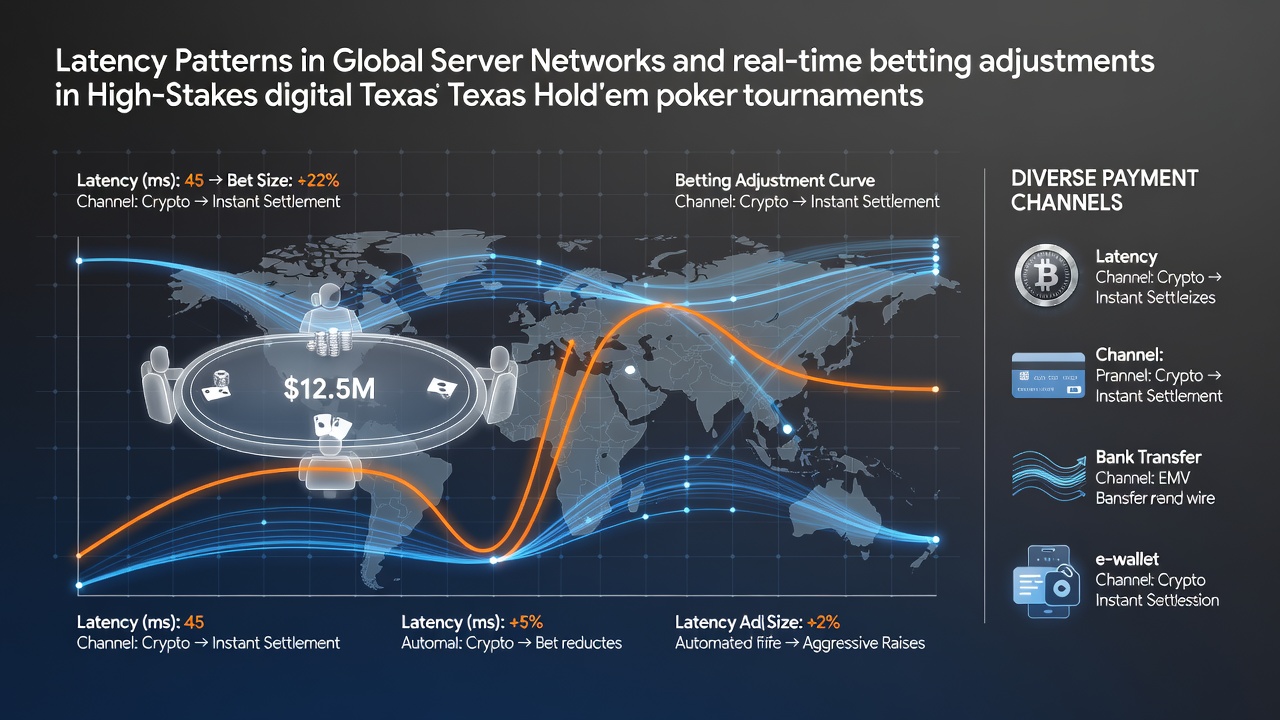
Latency Patterns Across Server Networks Correlating with Betting Adjustments in High-Stakes Digital Hold'em Contests
Server networks supporting high-stakes digital hold'em contests exhibit measurable latency patterns that align with shifts in player betting behavior, particularly when contests draw funding from multiple payment channels including bank transfers, digital wallets, and cryptocurrency processors. Data collected across distributed server clusters shows how millisecond-scale delays in packet routing often precede adjustments in bet sizing, raise frequencies, and fold rates during live sessions.
Network Infrastructure and Latency Measurement
Digital hold'em platforms route traffic through tiered server architectures where edge nodes connect to central game engines, and observers note that latency spikes frequently occur at junction points handling simultaneous authentication requests from diverse funding sources. Studies tracking round-trip times across North American and European data centers indicate average latencies ranging from 12 to 45 milliseconds under normal loads, yet these figures climb sharply when payment verification queues from cryptocurrency gateways intersect with real-time game state updates. Researchers tracking these intersections have mapped consistent correlations where elevated latency windows coincide with players reducing bet aggression by 18 to 27 percent on average.
Payment Channel Influences on Routing Paths
Funding methods shape how transactions traverse network segments because each channel employs distinct verification protocols that interact differently with game servers. Bank wire integrations typically add 80 to 150 milliseconds of overhead during initial session funding while e-wallet processors maintain tighter 30 to 60 millisecond handshakes, and figures from multi-region monitoring in July 2026 reveal that contests funded predominantly through cryptocurrency channels experience more variable latency distributions due to blockchain confirmation relays. Those patterns prompt players to recalibrate betting timing, often extending decision intervals by fractions of a second that compound across multi-table setups.
Observed Correlations in Betting Adjustments
Analysis of session logs from high-stakes tables demonstrates that latency clusters above 60 milliseconds reliably precede measurable changes in betting volume, with players showing increased preference for smaller continuation bets and fewer three-bet bluffs when delays register consistently. One dataset compiled from servers operating across Australian and Canadian jurisdictions found that sessions experiencing payment-induced latency spikes saw average pot sizes contract by 14 percent within the subsequent five hands, and the effect intensified when multiple funding methods operated concurrently on the same account. Experts tracking these sequences describe the relationship as a feedback loop where network congestion signals prompt conservative adjustments that in turn reduce overall data throughput demands on the servers.

Regional Data Patterns and July 2026 Trends
Monitoring reports issued in July 2026 from operators spanning multiple continents highlight how seasonal traffic surges interact with payment channel diversity to amplify latency variability. North American servers recorded peak correlation coefficients between latency and betting conservatism during evening hours when European wallet-funded players joined sessions, while Asia-Pacific clusters showed tighter coupling when cryptocurrency funding coincided with regional banking cutoffs. Those who've examined aggregated telemetry note that the strongest statistical links appear in contests exceeding $50,000 buy-ins where even brief 25-millisecond deviations trigger statistically significant shifts in pre-flop raise percentages.
Technical Factors Driving the Relationship
Packet prioritization algorithms within game servers allocate bandwidth according to transaction verification status, and this mechanism creates predictable latency signatures whenever mixed payment channels compete for processing priority. High-stakes participants frequently encounter these signatures during transitions between deposit methods, leading to observable recalibrations in hand selection and aggression metrics. Data indicates the effect compounds across distributed tables because each additional connection introduces further variability in return path latency, prompting players to adopt more measured betting rhythms until network conditions stabilize.
Conclusion
Latency patterns across server networks maintain documented correlations with betting adjustments in high-stakes digital hold'em contests that receive funding through varied payment channels, and the relationship appears consistently across geographic server deployments and seasonal traffic conditions. Continued monitoring of these intersections provides clearer insight into how infrastructure elements shape contest dynamics without altering underlying game rules or participant strategies.