Regional Currency Swings and Their Effects on Entry Volumes in Cross-Platform Hold'em Prize Circuits
Written by Noah Becker · Aug 13, 2026
Regional Currency Swings and Their Effects on Entry Volumes in Cross-Platform Hold'em Prize Circuits
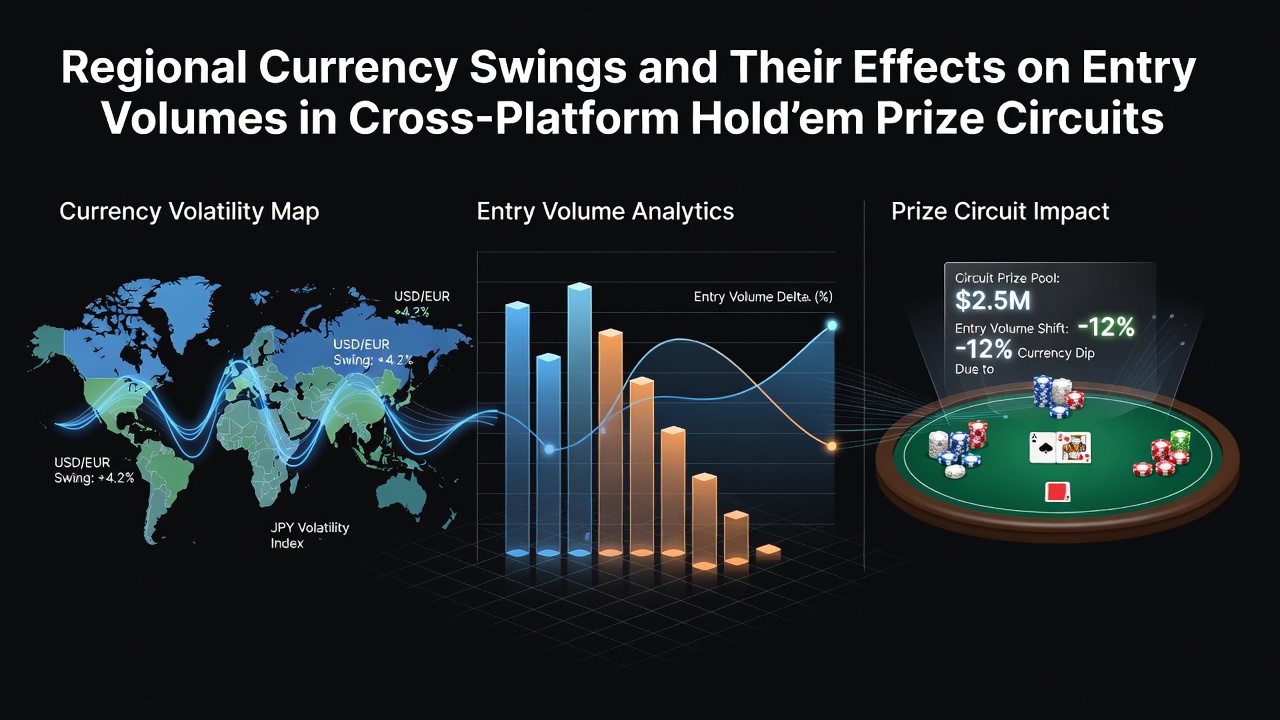
Regional currency swings create measurable shifts in entry volumes for cross-platform Hold'em prize circuits, where players convert local funds into platform currencies that often peg to the US dollar or euro. Exchange rate movements alter purchasing power for entry fees, and data from multiple regions shows direct correlations between depreciation or appreciation and participation rates in online tournaments.
Currency Movements and Fee Accessibility
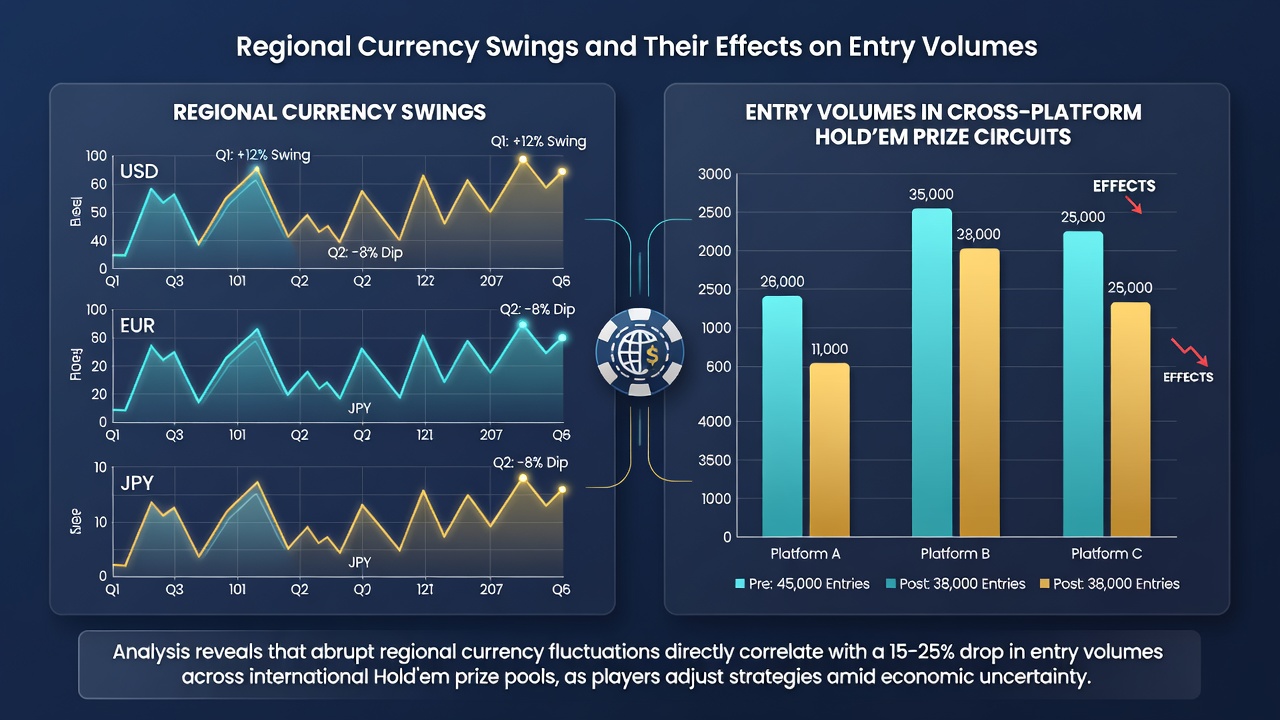
When a local currency weakens against the dollar, entry fees become more expensive in real terms for players in that region, and volumes drop accordingly in affected markets. Researchers tracking platforms in Latin America and Southeast Asia observed that a 10 percent depreciation in the Brazilian real or Indonesian rupiah coincided with entry reductions ranging from 12 to 18 percent over quarterly periods. Conversely, strengthening currencies in the same regions produced corresponding upticks in registration numbers during recovery phases.
Cross-platform environments amplify these effects because players move between mobile apps and desktop clients, yet the underlying fee remains fixed in the platform's base currency. Observers note that participants from emerging markets adjust session frequency and stake levels more rapidly than those in stable-currency zones, since even modest rate changes alter the cost-benefit calculation for multi-table entries.
Regional Patterns in 2026 Data
Figures compiled through mid-2026 reveal distinct geographic variations. In August 2026, platforms reported that Australian players increased entries by 9 percent following a period of Australian dollar strength, while Canadian participation remained steady despite minor fluctuations in the loonie. European markets showed mixed results tied to euro movements against both the dollar and regional currencies such as the Polish zloty and Turkish lira.
One study released by the American Gaming Association examined aggregated entry logs from major operators and found that volatility spikes lasting longer than 30 days produced sustained volume adjustments rather than temporary dips. The same analysis highlighted that players in high-volatility regions often shifted toward lower buy-in events or satellite qualifiers when local currencies declined sharply.
Platform Adjustments and Player Behavior
Operators respond to these swings by introducing localized pricing options or promotional credits that offset fee increases, and such measures have preserved some volume in affected regions. Yet researchers tracking multi-table circuits note that promotional offsets rarely eliminate the full impact of sustained currency weakness, since players still compare net costs across competing platforms.
Those monitoring activity in India and South Africa documented how rapid rupee and rand movements prompted players to consolidate entries into fewer but higher-value tournaments rather than spreading across multiple low-stakes events. This behavioral shift concentrates prize pool contributions while reducing overall headcount in mid-tier brackets.
Cross-Border Comparisons and Industry Reports
Industry reports from the European Gaming and Betting Association compared entry trends across EU member states and neighboring non-euro markets, revealing that non-euro participants exhibited greater sensitivity to monthly exchange fluctuations. The data indicated that platforms offering real-time currency conversion tools experienced smaller volume drops during depreciation periods than those requiring manual conversion steps.
Academic examinations of transaction logs further show that currency swings influence not only entry counts but also the timing of deposits, with players delaying funding until favorable rates appear. This pattern creates predictable troughs in daily registration numbers that align with forex market movements rather than traditional tournament schedules.
Conclusion
Regional currency swings continue to shape entry volumes in cross-platform Hold'em prize circuits through direct effects on fee affordability and indirect influences on player timing and stake selection. Available data through August 2026 confirms that operators and participants alike adapt to these fluctuations, yet the underlying relationship between exchange rates and participation remains consistent across tracked markets. Continued monitoring of these dynamics provides clearer insight into how global financial conditions intersect with online poker ecosystems.