The Interplay of Verification Timelines and Strategy Adjustments in Multi-Table Real-Money Circuits
Written by Avery Becker · Jun 1, 2026
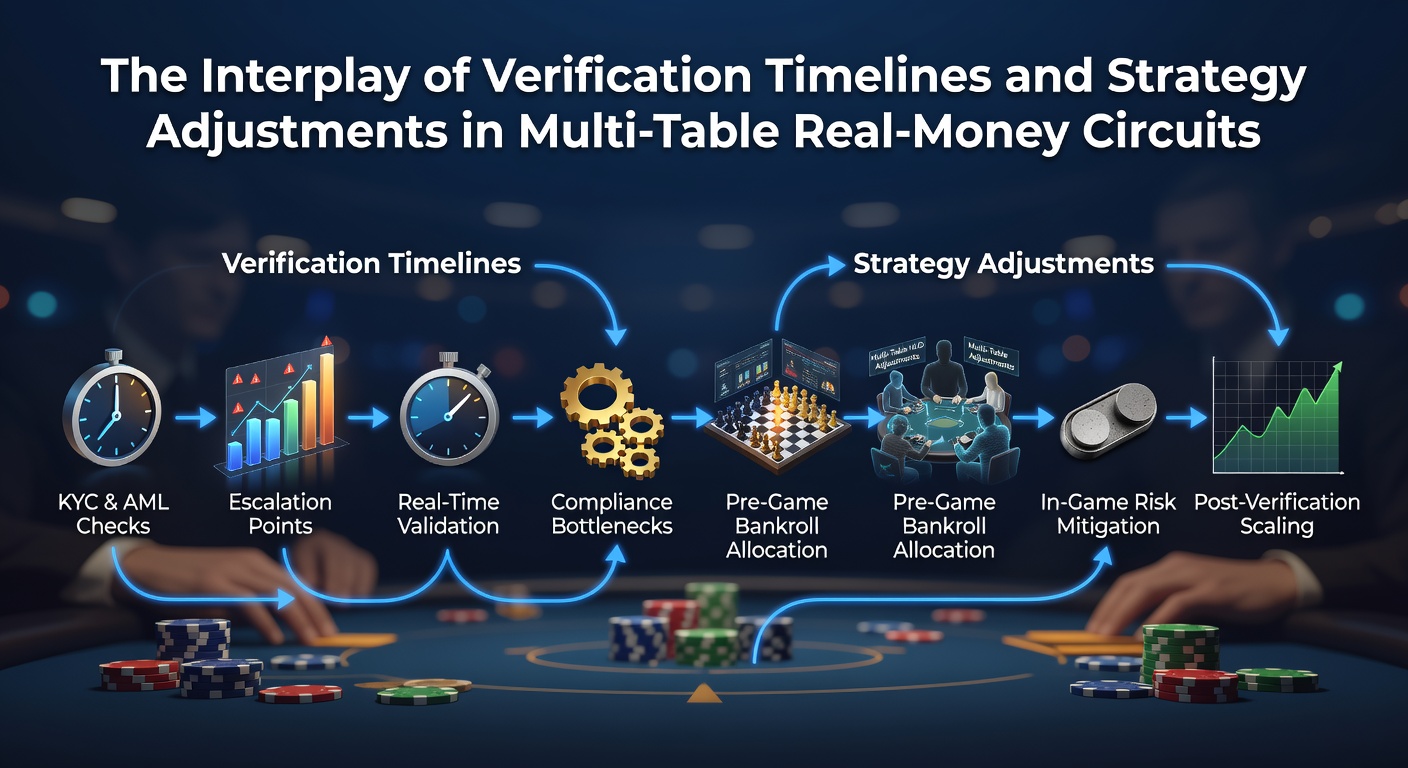
The Interplay of Verification Timelines and Strategy Adjustments in Multi-Table Real-Money Circuits
Verification processes in real-money poker platforms create specific timelines that intersect directly with how participants structure their multi-table tournament participation, and these timelines often determine entry patterns across extended circuits. Platforms require identity confirmation, address validation, and financial source checks that range from hours to several business days depending on jurisdiction and operator protocols, which means players must synchronize document submission with upcoming event schedules to avoid missing registration windows.
Core Elements of Verification Timelines
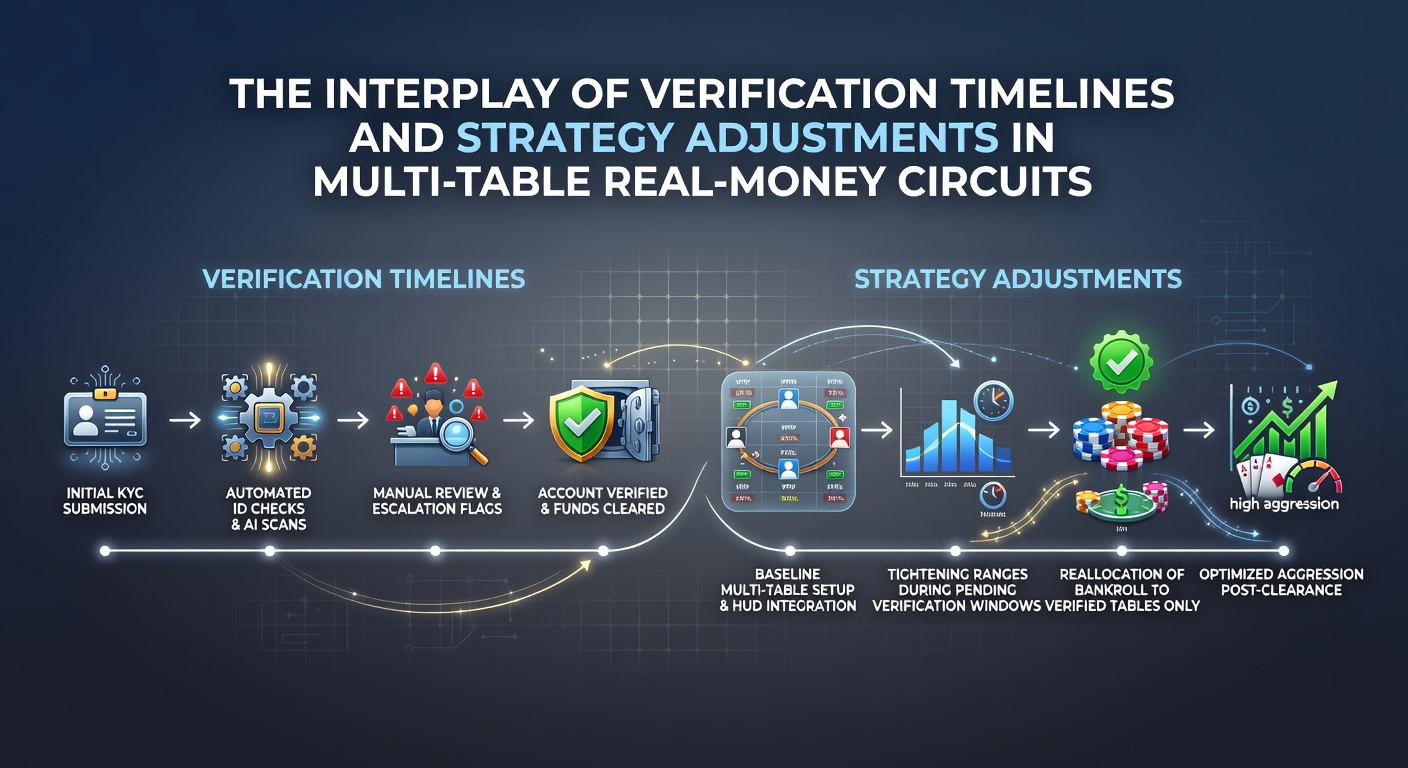
Operators implement tiered verification stages that begin with basic account setup and progress to full compliance before large withdrawals or high-volume play become possible, and data from regulatory filings show average completion times vary significantly by region. In North American markets, for instance, many sites process initial checks within 24 to 72 hours when documents are complete, whereas additional layers for payment method verification can extend that period further. Players who compete across multiple platforms therefore maintain pre-verified profiles on several sites simultaneously because staggered timelines allow continued access even when one account faces review.
Those who study tournament circuits note that verification delays frequently coincide with satellite qualification periods, forcing adjustments such as shifting focus to smaller buy-in events that require less stringent checks until primary accounts clear. Research from industry reports indicates this pattern repeats across major series, where participants who anticipate longer verification windows front-load their preparation by uploading passport scans, utility bills, and bank statements weeks ahead of peak seasons.
Strategic Adjustments During Active Circuits
Multi-table players respond to verification bottlenecks by altering bankroll allocation and schedule planning, and they often reserve portions of their funds for events on already-approved platforms while waiting for others to finalize. This approach preserves competitive volume without forcing abrupt halts, especially during circuits that span consecutive weekends. Observers tracking participation rates find that verified accounts show higher consistency in multi-table entries because they bypass last-minute administrative interruptions that can disrupt momentum in longer events.
Adjustments also extend to game selection, where some competitors pivot toward formats with quicker payout structures during verification windows to maintain cash flow. Platforms that offer instant verification for smaller transactions allow continued play at lower stakes, creating a buffer that supports strategy refinement without full account access. Figures from tournament databases reveal that players who complete verification early in a circuit maintain steadier performance metrics across tables because they avoid the mental overhead of monitoring approval status mid-session.
Regulatory Influences and Timeline Variations
Different licensing jurisdictions impose distinct verification requirements that directly shape how circuits unfold, and operators must align their processes with local standards. The American Gaming Association compiles data showing that states with streamlined digital identity systems reduce average verification periods compared to those relying on manual reviews, which in turn affects player migration between platforms during major series. Similar patterns appear in Canadian markets where provincial frameworks create predictable timelines that experienced competitors factor into their annual schedules.
June 2026 brings updated compliance deadlines in several North American jurisdictions that are expected to standardize certain verification steps across operators, potentially shortening overall timelines for recurring participants. Those who monitor regulatory calendars already prepare by gathering additional documentation now, allowing seamless transitions when new rules take effect and reducing the need for mid-circuit strategy overhauls.
Platform Tools and Player Preparation Patterns
Many sites now integrate real-time status trackers and automated reminders that help users manage verification alongside tournament calendars, and these features reduce the frequency of missed entries caused by pending checks. Participants who utilize these tools report fewer disruptions because they receive advance notice when supplemental documents are required, enabling quick responses without altering their core multi-table approach. Data indicates that platforms offering integrated calendar sync see higher retention rates during extended circuits since players can align approval milestones with specific event dates.
Preparation habits include maintaining digital folders with updated identification copies and using secure cloud storage for quick access across devices, which supports the fluid movement between tables that defines high-volume play. Operators that communicate expected processing windows clearly see more predictable participation curves, because competitors adjust their volume expectations rather than encountering sudden restrictions.
Conclusion
Verification timelines and multi-table strategy remain tightly linked through operational requirements that influence everything from schedule construction to bankroll distribution, and ongoing regulatory developments continue to refine these connections. Players who treat verification as an integral planning element rather than an afterthought sustain higher engagement levels across circuits, while platforms that streamline these processes gain competitive edges in attracting consistent participants. As standards evolve through 2026 and beyond, the interplay between compliance timing and tactical decisions will shape participation patterns in measurable ways across real-money poker environments.