Uncovering How Interface Tweaks Reshape Decision Speed During High-Volume Multi-Table Digital Hold'em Sessions
Written by Avery Becker · Jun 20, 2026
Uncovering How Interface Tweaks Reshape Decision Speed During High-Volume Multi-Table Digital Hold'em Sessions
Digital hold'em platforms have expanded rapidly in recent years, and players who manage eight or more tables at once encounter constant pressure on response times. Interface adjustments such as button placement, information density, and visual cues directly alter how quickly decisions register during these sessions, according to platform analytics collected through 2025 and into June 2026.
Software developers adjust layouts to reduce clicks and highlight priority actions, while data logs from major operators reveal measurable shifts in average decision intervals when those changes roll out. Multi-table participants often sit at mixed cash and tournament formats simultaneously, so even small layout modifications compound across dozens of hands per minute.
Core Elements That Influence Reaction Windows
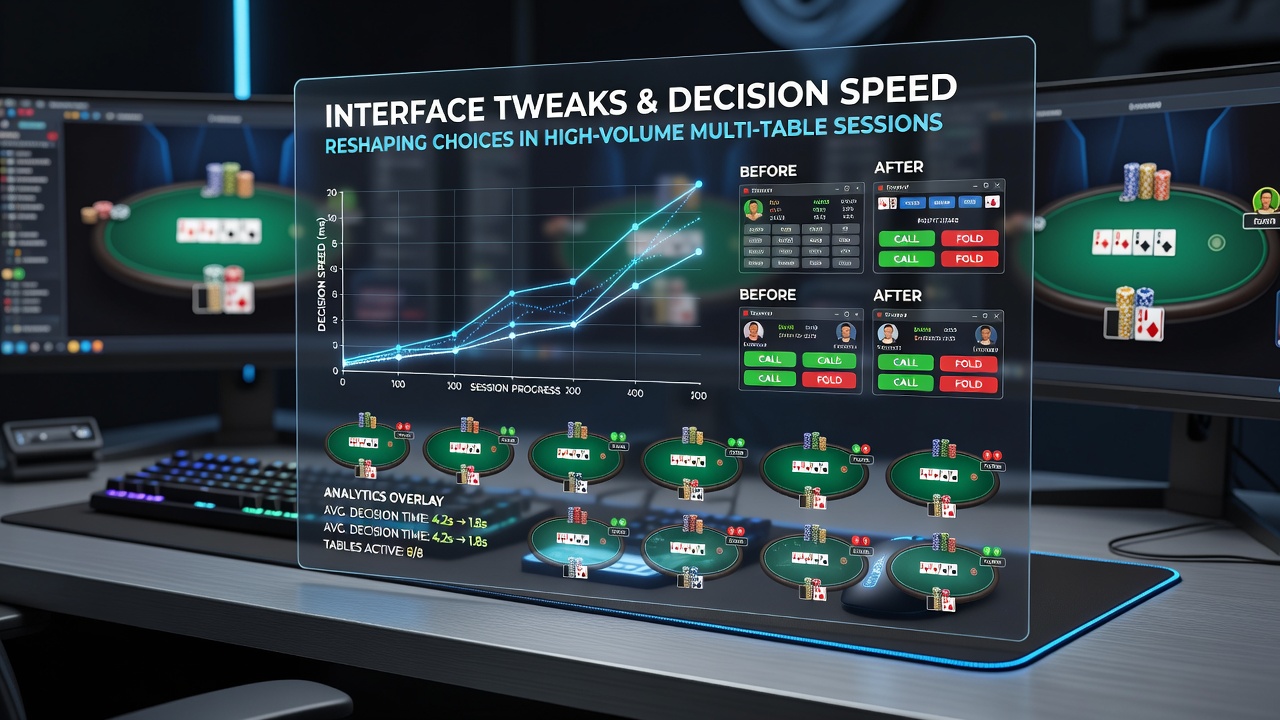
Button grouping represents one of the most common tweaks operators test. When fold, call, and raise controls cluster closer to the center of each table window rather than spreading along edges, recorded decision times drop by fractions of a second per action. Aggregated logs from several European-facing sites show this clustering effect compounds when users run ten or more tables, because cursor travel distance shrinks across the entire grid.
Color coding for bet sizing options follows a similar pattern. Platforms that assign distinct hues to minimum, half-pot, and pot-sized bets allow faster visual parsing, particularly during late-night sessions when eye fatigue sets in. Research compiled by the University of Nevada's gaming laboratory indicates that consistent color mapping correlates with tighter decision distributions in high-volume environments, though individual player experience levels moderate the size of the effect.
Information Display Adjustments and Cognitive Load
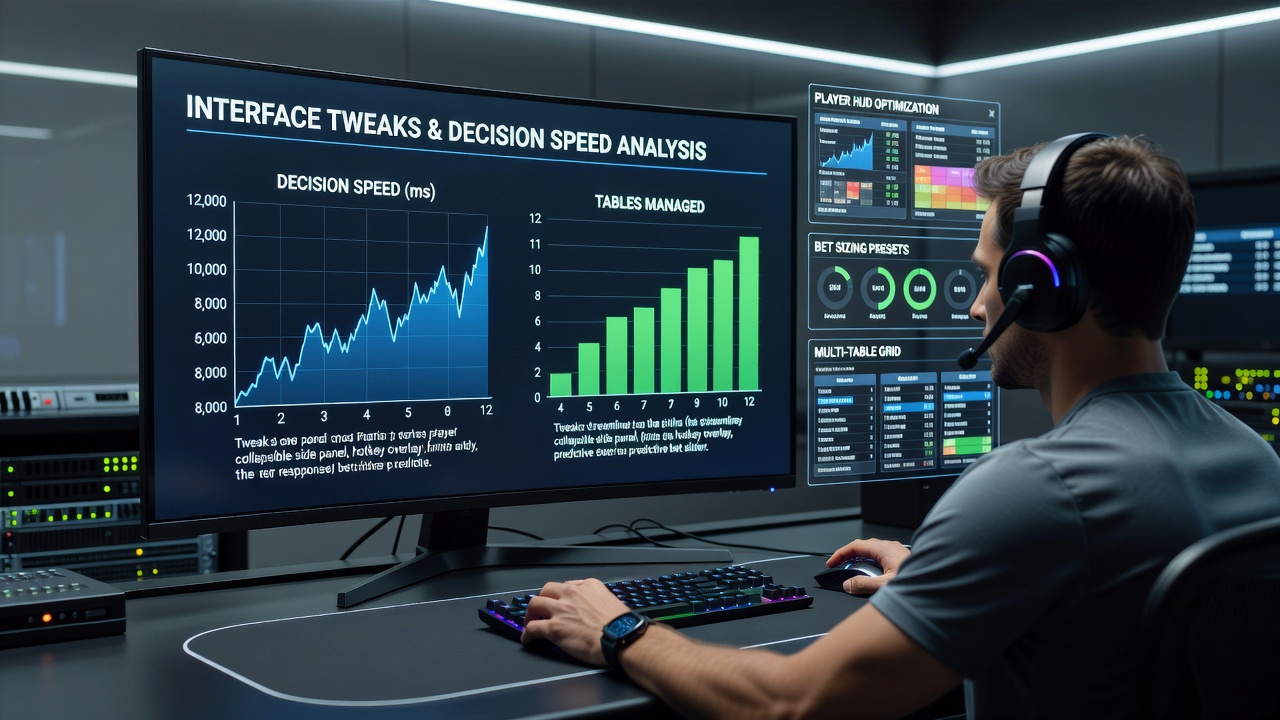
Real-time equity readouts and opponent history panels occupy significant screen space during multi-table play. When designers collapse these elements into expandable side panels or toggleable overlays, the main action area remains clearer and decision prompts receive more visual weight. June 2026 platform updates from several major networks introduced default-hidden stats panels, and early telemetry suggests average action confirmation speeds improved most noticeably among users managing twelve tables or higher.
Font scaling and contrast ratios also matter. Larger, higher-contrast text for stack sizes and pot totals reduces the need for second glances, especially on smaller monitors or laptop setups common in home environments. Observers note that players who previously relied on external tracking software sometimes disable those tools after interface refreshes improve native readability, freeing additional screen real estate for extra tables.
Timing Mechanisms and Their Interaction With Layouts
Built-in decision timers interact directly with interface changes. When countdown bars sit adjacent to action buttons instead of floating in separate corners, players register remaining time without shifting gaze, which shortens overall response latency. Data shared by the European Gaming and Betting Association in its 2025 industry review highlights that sites using integrated timers report fewer time-bank activations during peak evening hours across multi-table formats.
Animation speed for card reveals and chip movements creates another variable. Faster, subtler transitions keep the visual field from resetting between hands, allowing continuous focus on betting patterns across all active tables. Slower animations, by contrast, can create brief cognitive pauses that accumulate when dozens of hands unfold simultaneously.
Player Adaptation Patterns Across Skill Levels
Experienced multi-tablers adapt quickly to revised layouts, often within two or three sessions, whereas newer participants show longer adjustment periods. Platform support logs from North American operators indicate that users who enable custom hotkey bindings alongside interface tweaks achieve the shortest decision windows overall. Those bindings bypass mouse movement entirely for common actions such as checking or folding, which becomes critical when table counts exceed fifteen.
Device type further modulates outcomes. Desktop users with multiple monitors gain the most from expanded layouts that spread information without crowding, while mobile or tablet players benefit more from touch-optimized button zones that minimize misclicks under time pressure. Cross-platform telemetry collected through spring 2026 shows these device-specific differences persist even after identical backend rule sets apply.
Conclusion
Interface refinements continue to evolve alongside rising table volumes in digital hold'em, and the measurable impact on decision speed appears consistently across operator datasets. Continued monitoring of layout experiments will clarify which combinations deliver stable improvements without introducing new sources of distraction for high-volume participants.