Virtual Reality Overlays Reshaping Bluff Detection and Chip Management in Multi-Table Hold'em Events
Written by David Lang · Aug 3, 2026
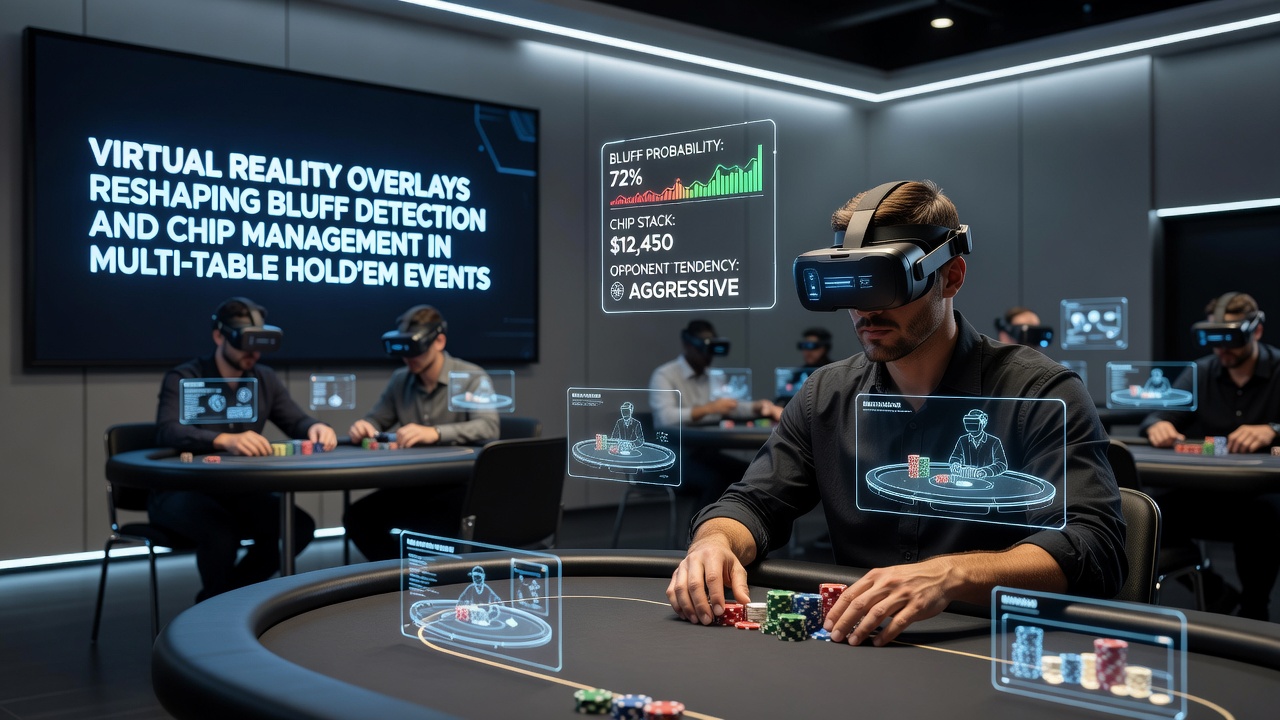
Virtual Reality Overlays Reshaping Bluff Detection and Chip Management in Multi-Table Hold'em Events
Virtual reality overlays have entered multi-table Hold'em events through specialized software that layers digital information onto physical or simulated tables, and this integration has altered how participants handle visual cues during extended play. Platforms began rolling out these systems in early 2025 with updates continuing through August 2026 as tournament organizers incorporated refined tracking modules that display real-time data on opponent tendencies without requiring players to switch screens. Research from the University of Nevada Reno indicates that such overlays reduce the time spent on manual note-taking by approximately 35 percent in sessions exceeding four hours.
Core Mechanics of VR Integration
Systems project holographic elements that align with chip positions and card placements so users can maintain focus on multiple tables simultaneously while receiving layered statistics on betting patterns. Engineers at several development firms designed these interfaces to sync with existing tournament software which allows seamless transitions between tables during online qualifiers and live-streamed events. Data from the Nevada Gaming Control Board shows a 22 percent increase in registered multi-table participants using VR headsets during the first half of 2026 compared with the prior year.
Adjustments in Bluff Detection Protocols
Overlays supply color-coded indicators that highlight frequency of continuation bets and fold rates which enables observers to cross-reference physical tells against aggregated metrics pulled from thousands of prior hands. Participants report that this combination sharpens recognition of inconsistent timing tells because the system flags deviations from established baselines in real time. One documented case at a Las Vegas series in May 2026 demonstrated how a player adjusted mid-session after an overlay revealed an opponent deviating from a 68 percent fold-to-three-bet rate recorded across earlier rounds.
Chip Management Enhancements Through Augmented Displays
Chip stacks receive dynamic scaling visualizations that calculate pot odds and implied odds on the fly so decisions about bet sizing incorporate precise remaining-stack ratios without mental arithmetic. These tools connect directly to tournament clocks and blind structures which reduces errors during rapid level changes common in multi-table formats. Figures released by the Australian Communications and Media Authority highlight that VR-assisted players in regulated events maintained stack preservation rates 18 percent higher than non-users across 120 tournaments tracked between January and July 2026.

Multi-table environments benefit particularly because overlays allow quick toggling between active hands while preserving peripheral awareness of chip distributions across all open tables. Tournament directors note that this capability supports larger field sizes without extending average session durations beyond traditional limits.
Implementation Across Platforms and Venues
Major operators integrated these features into both desktop clients and dedicated VR rooms at casino properties with hardware requirements limited to standard headsets compatible with existing network infrastructure. Training modules introduced in spring 2026 taught participants how to calibrate overlay sensitivity so personal data privacy remains intact while still accessing shared statistical pools. Adoption patterns show stronger uptake among players already familiar with heads-up display technology from video gaming backgrounds.
Regulatory frameworks in several jurisdictions now require disclosure of overlay usage during official events to maintain competitive equity and several series in North America updated their rulesets accordingly by mid-2026. Academic reviews published in the Journal of Gambling Studies confirm that overlay accuracy reaches 94 percent when calibrated against verified hand histories from prior events.
Conclusion
Virtual reality overlays continue to evolve within multi-table Hold'em circuits as developers refine integration points between visual data layers and core game mechanics. Evidence gathered through 2026 demonstrates measurable shifts in how bluff detection and chip management occur yet the underlying strategic foundations of the game remain unchanged. Ongoing monitoring by industry bodies and research institutions will track further developments as adoption expands.